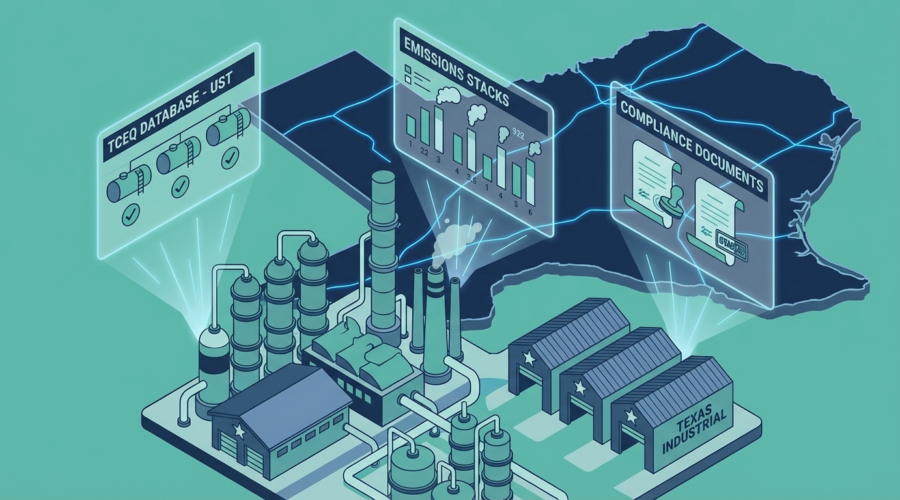
The Texas Commission on Environmental Quality has a long institutional memory. Violations recorded in the 1990s still appear in enforcement histories today. LPST cases opened twenty years ago remain in the database, open, because the responsible party never completed the required investigation. Spill notifications that were never followed up on sit in regulatory files, waiting for the next property transaction to surface them.
In my work conducting Phase I Environmental Site Assessments and regulatory compliance reviews across the DFW Metroplex, I encounter the same categories of environmental oversight repeatedly — not because facility managers are negligent, but because environmental compliance has a complexity and a long-term regulatory memory that routine facility operations don’t always account for.
These three oversights are the ones I see most often. They’re also the ones most likely to create significant regulatory exposure for Texas facility managers who assume that what they don’t know can’t hurt them.
Oversight #1: Assuming Closed Means Clean
The Regulatory Closure Spectrum
When a Texas facility resolves an environmental issue — a spill, a release, a permit violation — the regulatory process moves toward “closure.” But closure in the TCEQ framework is not a single, uniform status. There are multiple categories of closure that carry very different implications for current facility management and future property transactions:
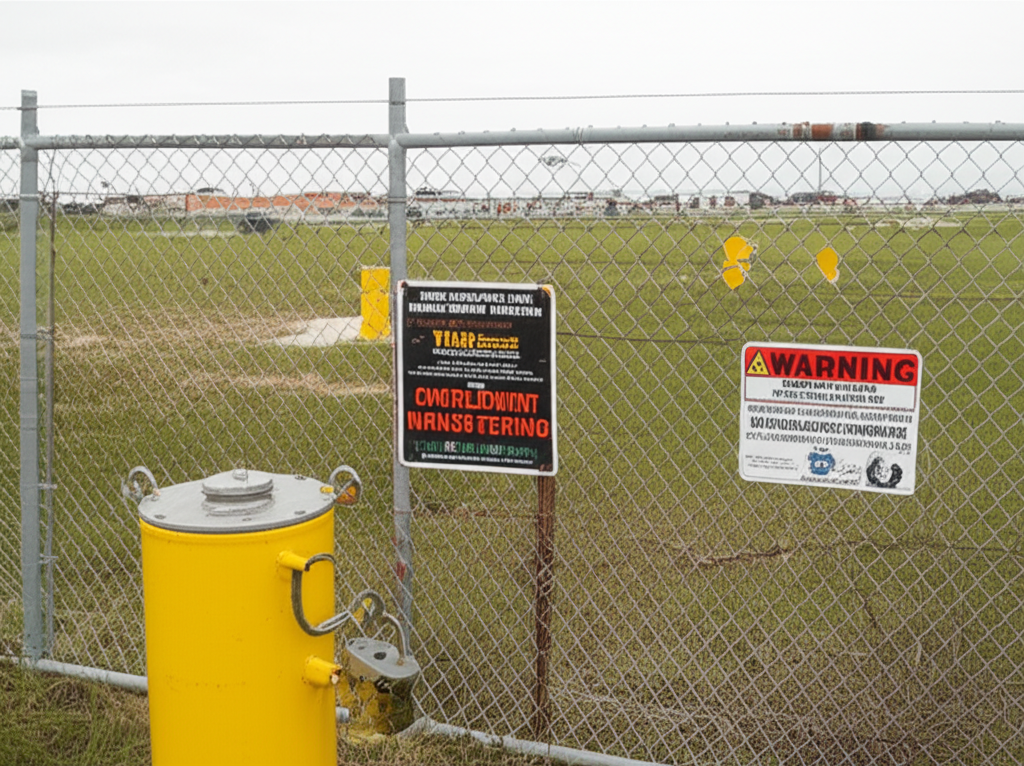
- Unrestricted Use/Unrestricted Exposure (UU/UE): The highest standard of cleanup. Contamination has been remediated to levels that allow any land use without institutional or engineering controls. This is clean in the fullest regulatory sense.
- Restricted Closure with Deed Notice: Contamination remains in place but at concentrations protective for the intended land use under specific exposure assumptions. A deed notice or environmental covenant is recorded in the property records restricting future land use changes. This is not clean — it’s managed.
- No Further Action (NFA) with Monitored Natural Attenuation (MNA): The site has been evaluated, contamination is present but declining through natural processes, and TCEQ has agreed that active remediation is not required as long as monitoring continues. This is ongoing management, not closure in the common-sense meaning of the word.
- Certificate of Completion under Texas VCP: Voluntary Cleanup Program closure, which may include institutional controls depending on the risk assessment performed.
Facility managers who inherited properties with regulatory “closure” frequently don’t know which category applies — or what obligations flow from that classification. The restricted closure with deed notice means that converting a commercial property to residential use, or installing a water supply well, could reopen the regulatory case and require additional remediation. Changing the land use in ways that violate the assumed exposure conditions documented in the closure can invalidate the regulatory acceptance of the existing contamination levels.
How This Creates Current Exposure
A facility manager who doesn’t know the terms of prior regulatory closure may inadvertently violate those terms — triggering a regulatory obligation to reinvestigate, re-characterize, and potentially remediate further. In Texas, the TRRP program allows contamination to remain in place when it meets PCLs for the applicable land use and exposure scenario. Change the use, change the exposure pathway, or change the institutional controls, and the PCLs may no longer be protective.
The practical implication: before any facility manager approves a new tenant, a building renovation, a utility installation, or a change in operations, they need to know whether their property has any prior regulatory closures with conditions attached — and what those conditions permit and prohibit.
Finding the History
TCEQ’s regulatory records are searchable through the agency’s Central Registry and LPST database. But database searches don’t always capture the full picture. Regulatory agency file reviews — physically reviewing the TCEQ file for a given site or facility — are the only way to see the complete regulatory history, including correspondence, sampling reports, institutional control documentation, and monitoring requirements that may not be captured in the database summary.
Oversight #2: Underground Storage Tank Compliance Gaps
Texas UST Regulations Are More Demanding Than Most Managers Realize
Texas has one of the most comprehensive Underground Storage Tank regulatory programs in the country, administered by TCEQ under the authority of the Texas Water Code and implementing regulations in 30 TAC Chapter 334. The requirements are detailed, the deadlines are firm, and the enforcement consequences of non-compliance are significant.
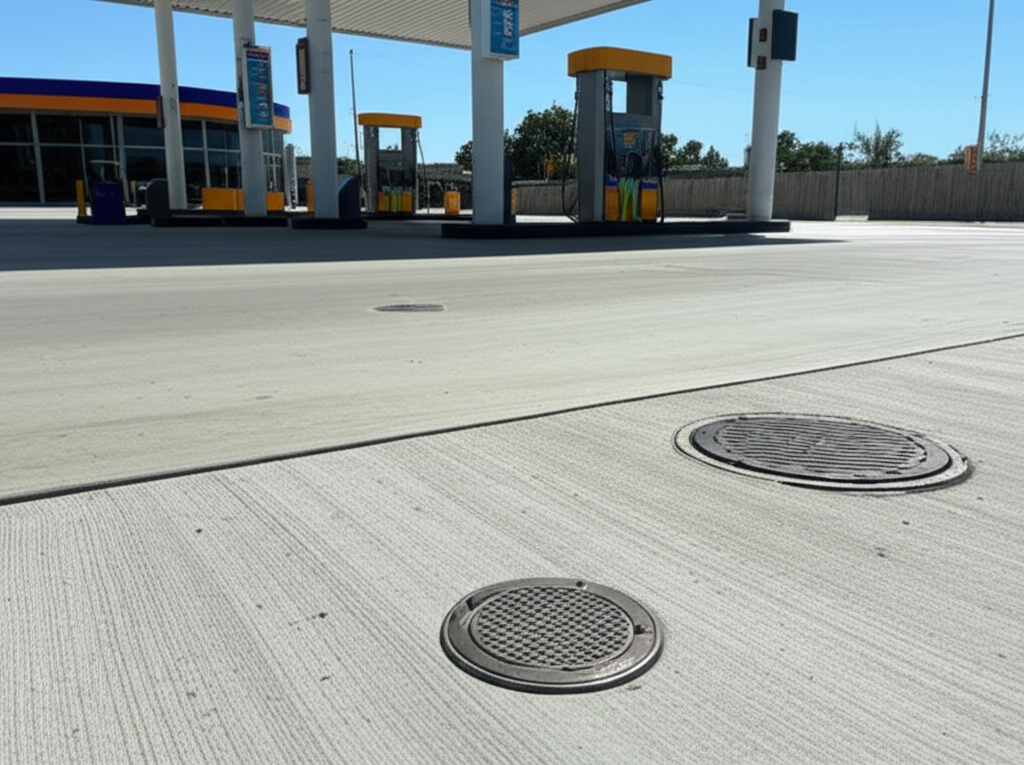
The most common UST compliance gaps I encounter at Texas facilities involve:
Release Detection Documentation
Texas UST regulations require monthly release detection monitoring for regulated tanks. The specific method depends on the tank system — options include statistical inventory reconciliation (SIR), automatic tank gauging (ATG), interstitial monitoring for double-wall tanks, groundwater monitoring, vapor monitoring, or others approved by TCEQ.
The documentation requirement is non-negotiable: monthly monitoring records must be maintained for at least three years from the date of monitoring. Facility managers who assume that the vendor handling ATG monitoring is also maintaining the required records — without verifying this — frequently discover during a regulatory inspection or a property transaction that the documentation doesn’t exist or is incomplete.
TCEQ inspectors don’t accept “the vendor has it” as a compliance response. The facility owner/operator is responsible for maintaining records, and the absence of required monitoring documentation is itself a violation — regardless of whether an actual release occurred.
Operator Training Requirements
Under EPA regulations implementing the Energy Policy Act of 2005, states with delegated UST programs (including Texas) are required to implement owner and operator training requirements. Texas adopted UST operator training requirements that apply to facilities with regulated USTs. Designated Class A, B, and C operators must be trained and certified.
This requirement is frequently overlooked at facilities that have had USTs for years without recent regulatory attention. The ownership or management may have changed, the designated operators may no longer work at the facility, and nobody updated the operator designations or verified that current staff met training requirements. A TCEQ inspection — or a transaction due diligence review — will surface this gap immediately.
Abandoned Tank Documentation
Facilities that have removed USTs — or believe they have — frequently lack complete closure documentation. Texas regulations require a closure assessment at the time of tank removal, including soil sampling in the excavation to determine whether a release occurred during the tank’s operational life. If that sampling wasn’t done, or if it was done but the documentation was lost, the facility has an unresolved regulatory obligation that TCEQ can require them to address.
Tanks that were “taken out of service” without formal closure — a practice that was common before tighter regulatory requirements were enforced — represent a particular risk. An out-of-service tank that was never formally closed under TCEQ regulations remains a regulatory obligation. The passage of time doesn’t extinguish it.
Oversight #3: Stormwater Compliance and Industrial General Permit Obligations
The TPDES Multi-Sector General Permit Is Not Optional
The Texas Pollutant Discharge Elimination System (TPDES) Multi-Sector General Permit (MSGP) authorizes stormwater discharges from industrial facilities in Texas — but only for facilities that have submitted a Notice of Intent (NOI) to TCEQ and are implementing a compliant Stormwater Pollution Prevention Plan (SWPPP). Facilities that discharge stormwater without permit coverage are operating without authorization, which is a Clean Water Act violation.
This is the oversight I encounter most frequently at Texas industrial facilities that have never been subject to a formal environmental audit or review: the facility generates stormwater runoff from outdoor industrial areas, storage yards, loading docks, or vehicle maintenance areas — and has never obtained TPDES permit coverage because nobody ever evaluated whether it was required.
Determining Whether Your Facility Needs Coverage
The MSGP applies to facilities in specific industrial sectors (listed in Appendix D of the permit) that discharge stormwater “associated with industrial activity.” The regulatory definition of “industrial activity” is broader than most facility managers assume. Sectors covered include:
- Facilities engaged in manufacturing, processing, or raw materials storage
- Hazardous waste treatment, storage, or disposal facilities
- Landfills, land application sites, and open dumps
- Recycling facilities
- Steam electric power generating facilities
- Transportation facilities with vehicle maintenance shops, equipment cleaning, or airport deicing operations
- Sewage treatment works
- Construction activities disturbing one acre or more (covered under a separate Construction General Permit)
Many light industrial and flex-industrial facilities in DFW’s suburban industrial corridors — Carrollton, Lewisville, Allen, McKinney, Garland, Grand Prairie — fall within covered sectors and have never obtained permit coverage. The facility may have changed hands multiple times since the permit obligation arose, with each transaction never surfacing the compliance gap because it wasn’t included in the environmental due diligence scope.
What the SWPPP Actually Requires
The Stormwater Pollution Prevention Plan is not a form you fill out once and file. It’s a living document that must be:
- Prepared before operations begin (or before the NOI is submitted)
- Site-specific: reflecting the actual layout, materials handling practices, and drainage patterns of the facility
- Implemented: the best management practices (BMPs) documented in the SWPPP must actually be in place
- Updated: when changes in operations, personnel, or physical layout occur that affect the stormwater management approach
- Available for inspection: kept on-site and produced immediately for TCEQ inspectors or authorized representatives
Annual comprehensive site compliance evaluations are required under the MSGP, and records of those evaluations must be maintained. Facilities that have a SWPPP on paper but haven’t conducted annual inspections, haven’t updated the plan to reflect operational changes, or can’t produce monitoring records are in violation — even if they have permit coverage.
The Enforcement Reality
TCEQ’s enforcement division conducts compliance inspections of industrial facilities throughout Texas. Stormwater compliance is a standard inspection element. Facilities found operating without MSGP coverage face NOVs (Notices of Violation) and potential penalty assessments. The penalty structure for unpermitted stormwater discharges under the Clean Water Act allows for penalties of up to $25,000 per day per violation — and TCEQ has authority to assess administrative penalties under the Texas Water Code as well.
Beyond the direct penalty exposure, a stormwater compliance finding during a property transaction — whether in a due diligence review, a regulatory file search, or a TCEQ inspection — becomes an environmental liability that affects the transaction. Buyers who discover permit coverage gaps during due diligence will price that risk into their offers or require seller remediation before closing.
The Common Thread
All three of these oversights share a common characteristic: they arise from assuming that silence from TCEQ means compliance. The agency doesn’t proactively notify facilities of compliance gaps. It inspects, it investigates triggered reports, and it responds to third-party complaints. The absence of a notice of violation in your regulatory history doesn’t mean you’re in compliance — it means you haven’t been inspected, or the inspection didn’t reach the issue.
Environmental compliance is a proactive obligation, not a reactive one. And TCEQ’s institutional memory means that gaps created today — or inherited from a prior operator or owner — will surface eventually. The question is whether they surface during a routine internal review you control, or during a transaction, an inspection, or an enforcement action you don’t.
Environmental Compliance Reviews for DFW Facilities
Vertexium Environmental Solutions conducts environmental compliance assessments for Texas industrial and commercial facilities — covering TCEQ regulatory status, UST compliance, stormwater permit obligations, and historical regulatory history. If you’re a facility manager who hasn’t conducted a systematic compliance review, now is the right time — before the next transaction, inspection, or enforcement action makes it urgent.
Schedule a compliance review consultation at vertexiumenv.com/contact.html.
Need Environmental Due Diligence?
Vertexium Environmental Solutions delivers Phase I ESAs with 2-3 week turnaround, fixed-fee pricing, and PhD-level technical review on every report.
Book a Free Consultation
Dr. Mohamed Elansary
PhD in Environmental Engineering from Texas A&M University-Kingsville. Founder of Vertexium Environmental Solutions, delivering Phase I/II ESAs and environmental due diligence for commercial real estate across the DFW Metroplex.