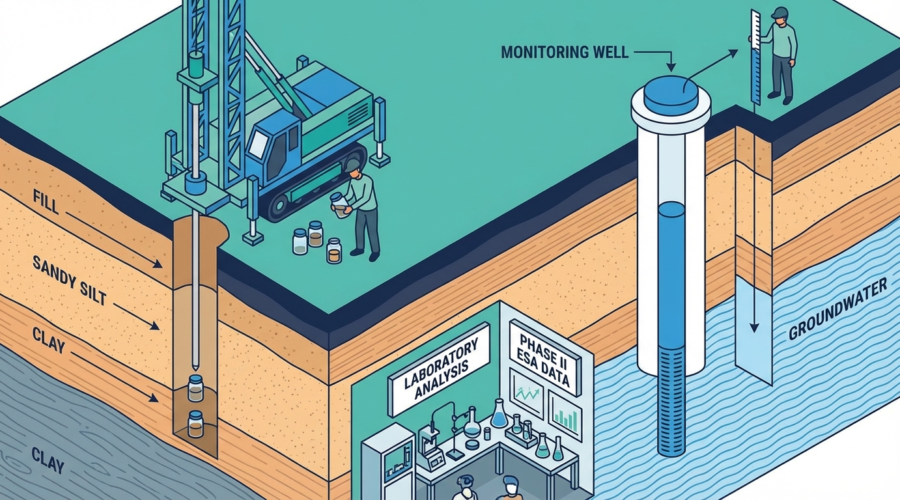
The Phase I Environmental Site Assessment establishes what’s known — the documented history of a property, the regulatory records associated with it, the observable conditions at the surface. When that process identifies conditions suggesting contamination may be present in the subsurface, the Phase II ESA answers the question that the Phase I can’t: is the contamination actually there, what is it, and how extensive is it?
Phase II ESAs are misunderstood by many commercial real estate professionals, facility managers, and property owners — often described vaguely as “the drilling part” or confused with Phase I in scope and purpose. This post explains what a Phase II ESA actually involves, when it becomes necessary, how it’s structured, and what the results mean for DFW properties where subsurface investigation is warranted.
What a Phase II ESA Is — and Isn’t
The Core Definition
A Phase II Environmental Site Assessment is a subsurface investigation conducted to evaluate whether a Recognized Environmental Condition (REC) identified in a Phase I ESA is associated with actual contamination in soil, groundwater, soil vapor, or surface water. The Phase II moves from document review and site observation to physical sampling and laboratory analysis.
The Phase II is governed by ASTM Standard E1903-19, which provides guidance for Phase II scope and methodology — though unlike the Phase I standard (ASTM E1527-21), the Phase II standard is more prescriptive about structure than minimum content, reflecting the reality that Phase II scope must be tailored to the specific conditions and RECs identified at each individual site.
What Triggers a Phase II
Not every Phase I ESA results in a Phase II recommendation. The decision depends on the nature and significance of RECs identified and the risk tolerance of the parties to the transaction. Common triggers include:
- Identified on-site RECs with no regulatory closure: A former UST on the subject property with no closure documentation, a historical dry cleaner operation with no Phase II data, a former auto repair facility with floor drain discharge history
- Open off-site LPST cases in the upgradient direction: Where a documented petroleum release on an adjacent or nearby property may have migrated toward the subject property
- Prior Phase II data showing contamination above TCEQ regulatory thresholds: A property with existing Phase II data showing exceedances that haven’t been investigated to define the extent of contamination
- RECs at properties being acquired for sensitive use: A property being converted from industrial to retail, office, or food service use — where the acceptable exposure concentrations under commercial land use may be more stringent than the industrial PCLs that applied previously
- Lender or transaction requirements: Certain transaction structures or institutional requirements specify Phase II investigation regardless of Phase I findings
Phase II Investigation Components
Soil Borings and Sampling
Soil borings are the primary investigative tool in most Phase II ESAs. A boring is advanced into the subsurface — typically using a hollow-stem auger drill rig, direct-push technology (Geoprobe), or rotary drilling depending on the depth, soil type, and objectives — to collect soil samples at target depths for laboratory analysis.
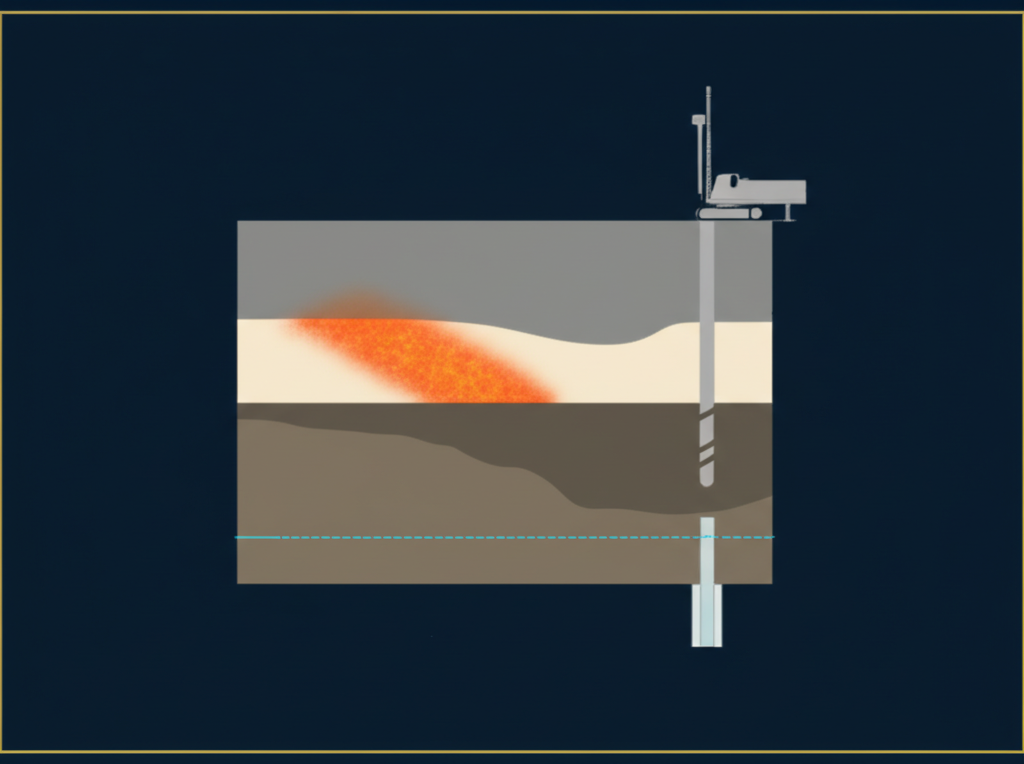
In DFW, drilling and sampling conditions vary significantly by location and geological formation:
- Eagle Ford Clay areas (Arlington, Grand Prairie, Irving): The highly plastic Eagle Ford clay is challenging to advance through with direct-push technology. Hollow-stem auger drilling is often required. The clay’s low permeability means groundwater may not be immediately apparent in borings — saturated conditions may exist in fractures or in thin sand lenses within the clay sequence that require careful logging to identify.
- Austin Chalk areas (Dallas, Plano, Richardson, Frisco): Shallow borings in the weathered Austin Chalk residuum encounter a variable clay/silt/chalk rubble sequence. Bedrock is typically reached within 15-30 feet in most of the northern Metroplex. Bedrock borings require air rotary or rotary mud drilling, which can complicate sample collection for volatile organic compound analysis.
- Alluvial areas (floodplain settings, creek corridors): DFW’s creek and river corridors have alluvial sand and gravel deposits with much higher hydraulic conductivity than the upland clay/chalk formations. Contamination in alluvial settings can migrate more rapidly and at larger scale than upland equivalents.
Soil samples are collected using split-spoon samplers (for disturbed samples) or thin-walled Shelby tubes (for relatively undisturbed samples needed for geotechnical characterization). For volatile organic compound analysis, soil samples must be collected and sealed immediately using EPA-approved preservation protocols to prevent vapor loss before laboratory analysis.
Monitoring Well Installation and Groundwater Sampling
When the Phase II investigation includes groundwater characterization — and it typically does for petroleum or solvent RECs — monitoring wells are installed to allow access to the water table for sampling and water level measurement.
Standard monitoring well construction in Texas involves:
- A PVC casing (typically 2-inch diameter for monitoring wells, 4-inch for recovery wells) with a screened interval across the water table zone
- Filter pack (clean sand or gravel) surrounding the screened interval to allow water to enter the well
- A bentonite/grout seal above the filter pack to prevent surface water intrusion and vertical communication between different zones
- Surface completion (flush-mount or stick-up) appropriate for the site setting
Monitoring wells must be developed after installation to remove drilling fluids and fine particles from the screened interval before baseline sampling. In low-permeability Eagle Ford clay settings, well development can take hours to days due to slow recharge rates.
Groundwater samples are collected using low-flow purge-and-sample procedures (EPA Method 405.1 or equivalent), which minimize turbulence and disturbance of the formation water to produce representative samples. Field parameters — pH, specific conductance, dissolved oxygen, oxidation-reduction potential, temperature — are monitored during purging and recorded as indicators of sample quality.
Analytical Parameters and Laboratory Methods
The analytical suite for a Phase II ESA is selected based on the identified RECs and the suspected contaminant types. In Texas, Phase II analytical results are typically compared to TCEQ Texas Risk Reduction Program (TRRP) Protective Concentration Levels (PCLs) for the applicable land use classification.
Common analytical parameters for DFW Phase II investigations include:
- BTEX (Benzene, Toluene, Ethylbenzene, Xylenes): The dissolved-phase fraction of most petroleum fuel releases. Analyzed by EPA Method 8260 (GC/MS volatile organics). Benzene is the most toxicologically significant BTEX compound and typically the parameter that drives regulatory action for petroleum release sites.
- Total Petroleum Hydrocarbons (TPH): Analyzed by carbon range fraction (TPH-Cx, TPH-Cy, TPH-Cz) to characterize the type and concentration of petroleum product present. DRO (diesel range organics), GRO (gasoline range organics), and ORO (oil range organics) fractions are evaluated against TCEQ PCLs.
- Volatile Organic Compounds (VOCs): For chlorinated solvent RECs, a full USEPA Method 8260 VOC suite targets TCE, PCE, TCA, DCE isomers, vinyl chloride, and related compounds. Vinyl chloride, the terminal degradation product of chlorinated solvents under anaerobic conditions, is one of the most toxicologically significant compounds in this class.
- Metals: For RECs involving industrial operations with metals use, former rail corridors (arsenic), or historical manufacturing — analyzed by EPA Method 6010/6020 (ICP) with method-specific detection limits appropriate for comparison to TCEQ PCLs.
- SVOCs (Semi-Volatile Organic Compounds): For former dry cleaning, manufacturing, or waste disposal RECs — a broad screening for PAHs, pesticides/herbicides, and other semi-volatile compounds.
Soil Vapor Sampling
Where volatile contaminants are present in shallow soil or groundwater beneath occupied or planned-occupancy structures, soil vapor sampling is conducted to characterize the vapor intrusion pathway. Soil vapor samples are collected from temporary or permanent sub-slab or soil vapor probes and analyzed for volatile organics.
The EPA’s vapor intrusion guidance establishes attenuation factors for estimating indoor air concentrations from soil vapor data — but these generic attenuation factors have known limitations, and site-specific conditions (building construction, HVAC configuration, foundation integrity) can substantially affect actual vapor intrusion rates. Where vapor intrusion is a credible pathway, sub-slab pressure field extension testing and indoor air sampling may be warranted to develop site-specific attenuation data.
Interpreting Phase II Results: The TCEQ TRRP Framework
Protective Concentration Levels and Land Use
Phase II analytical results are evaluated against TCEQ’s TRRP Protective Concentration Levels, which are chemical-specific, medium-specific (soil vs. groundwater), and land-use specific. Texas maintains PCLs for three land use categories:
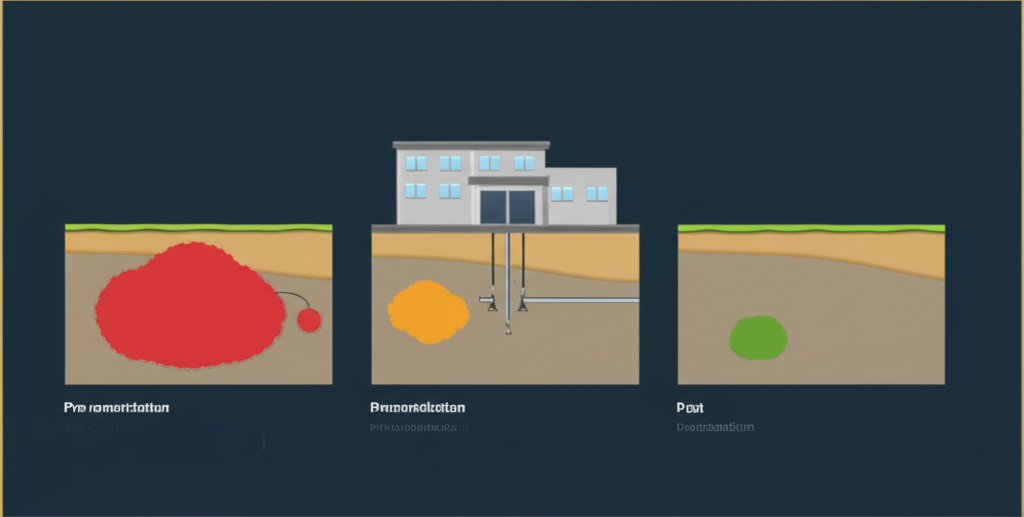
- Residential (1R): Most stringent. Applies where residential exposure (residents who live on the property, with direct contact with soil) is the anticipated land use scenario.
- Commercial/Industrial (1CI): Less stringent than residential. Applies to commercial and industrial land use where workers have occupational exposure but residential exposure assumptions don’t apply.
- Industrial (1I): Least stringent. For industrial properties with specific land use controls.
The applicable PCL standard directly affects the interpretation of Phase II results. A benzene concentration in groundwater that exceeds the residential PCL may be below the commercial/industrial PCL — meaning the same contamination may require remediation under one land use scenario and not another. Correctly identifying and applying the applicable PCL standard is a critical technical and regulatory judgment that requires understanding the TRRP framework, not just looking up numbers in a table.
When Results Are Above PCLs: The Remediation Decision
When Phase II results show concentrations above applicable TCEQ PCLs, the path forward depends on the specific conditions — contaminant type, concentration, spatial extent, migration potential, and applicable regulatory program:
- TCEQ LPST Program: For petroleum releases at registered UST facilities, the LPST program provides the regulatory framework for notification, investigation, and cleanup. Texas requires notification of a confirmed release within 24 hours of discovery. The investigation and remediation process is managed through TCEQ’s regional offices.
- Texas Risk Reduction Program (TRRP): For non-LPST contamination, TRRP provides the framework for risk-based cleanup. The responsible party develops a cleanup level based on site-specific risk assessment and land use assumptions, and demonstrates that those levels have been achieved.
- Texas Voluntary Cleanup Program (VCP): Provides a structured path to regulatory closure for sites where the current owner wants to proactively remediate prior contamination to obtain a Certificate of Completion. VCP is particularly useful for redevelopment transactions where the buyer wants regulatory closure certainty.
Phase II ESA Costs and Timeline for DFW Properties
A Phase II ESA for a standard DFW commercial property — three to five soil borings, two to three monitoring wells, and standard analytical suite — is scoped to the investigation and typically requires 4-6 weeks from mobilization to final report delivery. Scope expands for properties with complex REC histories, multiple contaminant types, or large sites requiring extensive boring networks.
Timeline milestones:
- Days 1-7: Work plan preparation, utility clearance (Texas 811), drilling contractor mobilization, sampling equipment preparation
- Days 8-12: Field work — boring advancement, sample collection, monitoring well installation
- Days 13-25: Laboratory turnaround (standard turnaround; rush available at additional cost), well development and initial groundwater sampling
- Days 26-35: Data review, TRRP PCL comparison, report preparation
- Days 36-42: Report delivery, results interpretation, regulatory strategy recommendations
What Phase II Results Mean for Your Transaction
Phase II results that show no exceedances of applicable TCEQ PCLs — a “clean” Phase II in the practical sense — provide strong documentation that the identified REC doesn’t represent actual contamination at levels requiring regulatory action under the applicable land use scenario. This can support transaction closing with confidence about the specific risk that was investigated.
Phase II results that identify exceedances shift the transaction into a remediation and regulatory strategy discussion. The options — price adjustment, seller-funded remediation escrow, VCP enrollment, institutional controls — depend on the specific conditions, the timeline constraints, and the parties’ risk tolerance.
Either way, the Phase II produces information that the transaction can be based on. That’s the point of the exercise.
Contact Us About a Phase II ESA
Vertexium Environmental Solutions conducts Phase II Environmental Site Assessments throughout the Dallas-Fort Worth Metroplex. Every investigation is designed around the specific RECs, geological conditions, and regulatory context of the subject property — not a generic boring program. Scoped to the property and investigation requirements.
Contact us at vertexiumenv.com/contact.html to discuss your property’s Phase II investigation needs.
Need Environmental Due Diligence?
Vertexium Environmental Solutions delivers Phase I ESAs with 2-3 week turnaround, fixed-fee pricing, and PhD-level technical review on every report.
Book a Free Consultation
Dr. Mohamed Elansary
PhD in Environmental Engineering from Texas A&M University-Kingsville. Founder of Vertexium Environmental Solutions, delivering Phase I/II ESAs and environmental due diligence for commercial real estate across the DFW Metroplex.