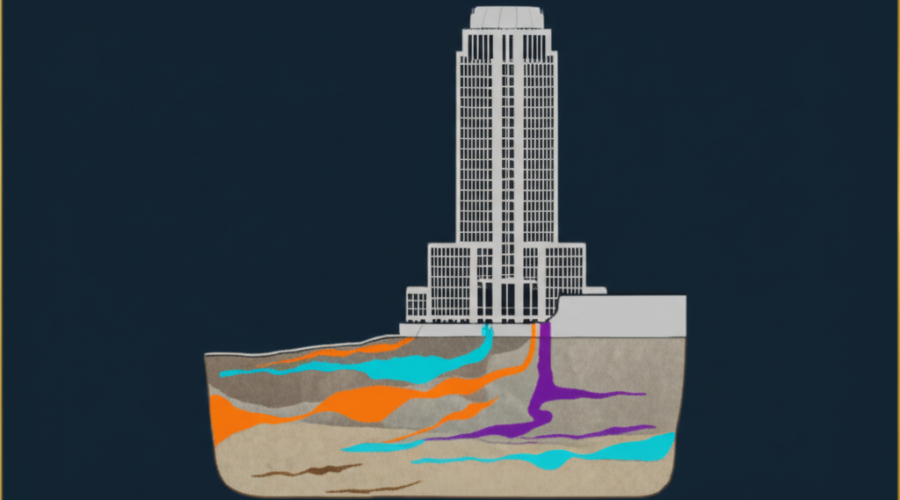
The traditional environmental consulting firm model hasn’t changed much in forty years. You hire a firm. The firm employs environmental scientists, field technicians, laboratory coordinators, and project managers on staff. You pay rates that cover all of that overhead — office leases in Class A buildings, benefits packages, administrative staff, marketing departments, and the layers of project management between the person who actually walked your site and the person whose name appears on the report.
For much of the history of environmental consulting, that model made sense. Regulatory compliance was complex and evolving. Field work required coordinated teams with specialized equipment. Maintaining in-house expertise across disciplines was how you ensured quality and liability coverage.
The world has changed. And the model that best serves clients has changed with it.
At Vertexium Environmental Solutions, I’ve built something different — not because I couldn’t build a traditional firm, but because I don’t think a traditional firm delivers the best outcome for commercial real estate clients in DFW. This post explains the model and why it works.
The Problem With the Traditional Model
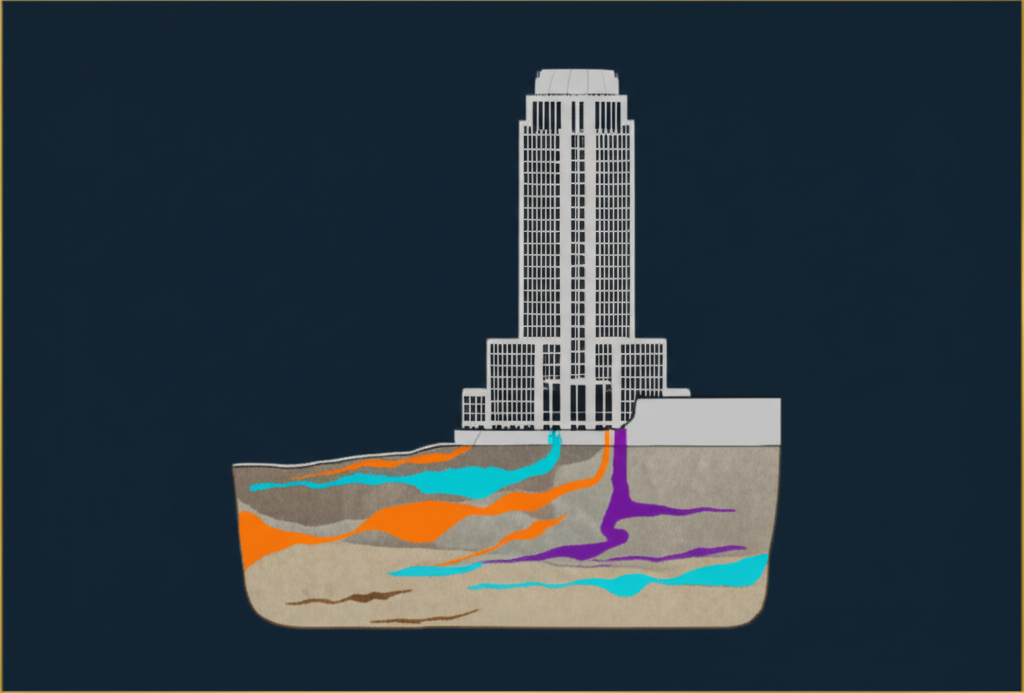
Traditional environmental consulting firms carry significant overhead. Staff environmental scientists. Field crews on salary. Trucks, sampling equipment, personal protective equipment. Office space. HR departments. Business development staff. Legal and insurance overhead allocated across every project.
That overhead has to go somewhere. It goes into your bill rate.
When a large national firm quotes a Phase I ESA, the project manager is priced at $175-250/hour. The field scientist might be $125-175/hour. The technical reviewer might be $200/hour or more. These rates aren’t primarily reflective of the value delivered on your specific project — they’re reflective of the cost structure the firm needs to sustain.
The other consequence of the traditional model is specialization compression. A generalist environmental scientist who works for a large firm handles Phase I assessments, Phase II sampling events, remediation oversight, compliance permitting, and whatever else comes through the door. They’re competent at many things and expert at very few. The firm’s business model requires it — maintaining staff utilization rates demands that people work across practice areas.
For complex DFW commercial real estate transactions, where the historical research needs to be genuinely expert-level and the regulatory interpretation needs to be current and Texas-specific, “competent generalist” is not the quality standard that protects your client.
The Network Model: What It Is and Why It Works
The model I’ve built at Vertexium Environmental Solutions is fundamentally different. I function as the principal Environmental Professional — the licensed PE who designs each assessment, reviews all work product, interprets findings, and stamps the final report. The regulatory responsibility and professional liability rest with me personally, not distributed across a faceless firm.
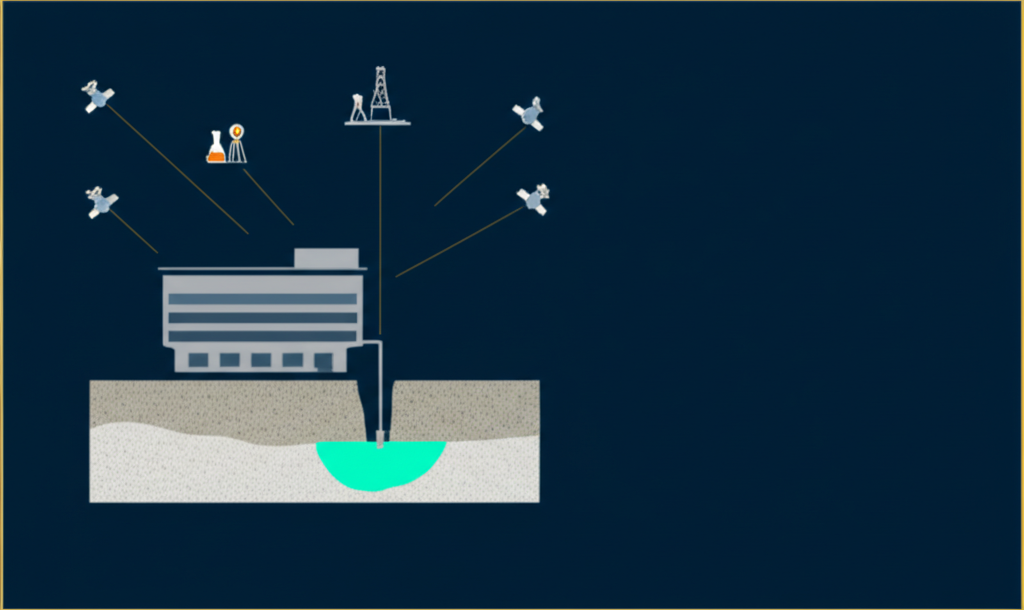
For the fieldwork — the site reconnaissance, the soil and groundwater sampling events for Phase II assessments, the laboratory sample management — I work with a network of specialized subcontractors who are experts in their specific disciplines. Texas-licensed field geologists who have spent careers doing nothing but subsurface investigation. Certified laboratory analysts who work exclusively with environmental samples. GIS specialists who do nothing but environmental mapping and historical photo analysis.
This isn’t a compromise on quality. It’s a structural improvement on it.
Why Specialization Beats Generalism
A field geologist who has logged several thousand soil borings in DFW’s specific geology — the Eagle Ford clay, the Austin Chalk, the Woodbine aquifer formation — brings a level of subsurface intuition that no generalist staff scientist can match. They know when a soil description is unusual. They know when the clay lens they’re seeing at 12 feet is typical for this part of Tarrant County or anomalous. They know what a TCE-impacted clay smells like versus what a naturally occurring reducing condition smells like.
That expertise is what produces accurate field data. Accurate field data is what produces defensible reports. Defensible reports are what protect your client’s transaction.
Why PE-Level Oversight Matters
In the traditional large-firm model, quality control is institutional. The firm’s name is on the report. The firm’s procedures govern the work. Individual accountability is diffuse.
In the network model with a PE as principal, accountability is concentrated and personal. My Texas Professional Engineer license is on every report I produce. My professional reputation — built through a PhD in Environmental Engineering from Texas A&M University-Kingsville and years of applied research and practice — is attached to every conclusion I draw.
That’s not a marketing statement. It’s a structural quality guarantee. When I review the historical research, the field observations, the laboratory data, and the regulatory database results on a Phase I ESA, I’m reviewing it with the understanding that I am the responsible party. There’s no chain of management above me to catch errors I let through. There’s no project manager between me and the client to absorb responsibility. The work product is mine, and it has to be right.
What This Means for Cost and Timeline
The absence of traditional overhead translates directly into competitive pricing without quality compromise.
A Phase I ESA from Vertexium Environmental Solutions is priced competitively with — or below — regional and national firms for assessments of comparable scope. The difference is that at our price point, you’re getting PE-level professional judgment and doctoral-level environmental engineering expertise, not a junior field scientist doing their third Phase I assessment under the nominal supervision of an overextended project manager.
On timeline, the network model is frequently faster than the traditional firm model. There’s no internal scheduling backlog. When a DFW commercial real estate transaction has an environmental due diligence window that needs to be met, I’m coordinating directly with my field and laboratory network to hit that deadline — not waiting for internal staff availability or navigating firm-wide project scheduling systems.
The VES Model in Practice: A DFW Phase I
Here’s what a Phase I ESA engagement with Vertexium Environmental Solutions actually looks like:
Initial consultation: I speak directly with the client — whether that’s the buyer, the transaction attorney, or the lender’s environmental review team — to understand the property, the transaction structure, and any known or suspected environmental concerns. This isn’t a data intake form handed to a project coordinator. It’s a conversation with the PE who’s going to do the work.
Historical research: I conduct the historical research personally, using primary sources — Sanborn maps, historical aerial photographs, city directories, USGS topographic maps — in addition to standard regulatory database queries. For properties with complex histories, I engage specialist historical researchers as needed.
Site reconnaissance: I personally conduct the site visit for every Phase I assessment. I walk the property, inspect accessible interior spaces, document conditions, photograph the site, and evaluate adjacent properties. The EP who reviewed the records is the same EP who walked the site — there’s no handoff between the desk review and the field work.
Regulatory interpretation: Texas environmental regulations are specific and frequently updated. TCEQ’s Texas Risk Reduction Program (TRRP) protective concentration levels, TCEQ’s Leaking Petroleum Storage Tank (LPST) database, and TCEQ’s voluntary cleanup program all require current knowledge to interpret correctly. I maintain that current knowledge because environmental regulation in Texas is my professional practice, not a subset of a broad consulting portfolio.
Report preparation and PE stamp: The final Phase I report is prepared and reviewed by me as the ASTM E1527-21 Environmental Professional. When a PE stamp is required for a TCEQ submission, it is applied by a licensed Texas PE engaged through our subcontractor network. Every finding is documented, every conclusion is supported, every REC characterization is defensible. The report your client receives is the work product of someone who is personally and professionally accountable for its accuracy.
What the Network Model Doesn’t Compromise
The legitimate question about any non-traditional business model is: what’s the catch? What does the client give up?
The answer, in the case of the VES network model, is nothing of substance.
Liability coverage: Vertexium Environmental Solutions maintains professional liability (errors and omissions) insurance and general liability insurance appropriate for environmental consulting services. The insurance structure is not contingent on firm size — it’s contingent on the scope and type of work performed.
Regulatory defensibility: Phase I ESAs produced under the VES model comply with ASTM E1527-21 and USEPA’s All Appropriate Inquiries rule (40 CFR Part 312) to the same standard as any reputable national firm’s work product. The standard is the standard regardless of firm size.
Capacity for complex projects: For Phase II ESAs, remediation management, and large-scale environmental due diligence projects, the network model scales effectively. I engage the specialist subcontractors appropriate for the project scope — additional field crews, specialized analytical laboratories, regulatory liaison specialists — without carrying that capacity as fixed overhead when it’s not needed.
The Broader Shift in Professional Services
The network model in environmental consulting reflects a broader shift in how professional services are delivered across industries. The same structural evolution that has produced boutique law firms, independent financial advisors, and specialized medical practices is happening in environmental consulting — and for the same reasons.
Clients who understand what they’re buying increasingly prefer the model where personal accountability is clear, specialized expertise is genuine, and overhead costs don’t inflate their bill. The “big name firm” premium has always been partly about the brand and partly about risk transfer — the comfort of dealing with an institution rather than an individual. But for clients who understand environmental due diligence, that premium often doesn’t buy better work product. It buys a different letterhead.
The work product that protects your transaction comes from a qualified Environmental Professional who genuinely knows what they’re doing, takes personal accountability for their findings, and applies the depth of expertise that DFW commercial real estate requires. That’s what the VES model delivers.
Let’s Talk About Your Project
Whether you’re a commercial real estate investor evaluating an acquisition, an attorney managing environmental due diligence for a client, or a lender reviewing environmental risk on a loan, Vertexium Environmental Solutions provides Phase I ESAs, Phase II ESAs, environmental due diligence, and remediation management that match the technical depth your transaction requires.
The model is built for DFW. The expertise is built for complex properties. The accountability is built in by design.
Schedule a free consultation at vertexiumenv.com/contact.html — and let’s talk about what your project actually needs.
Need Environmental Due Diligence?
Vertexium Environmental Solutions delivers Phase I ESAs with 2-3 week turnaround, fixed-fee pricing, and PhD-level technical review on every report.
Book a Free Consultation
Dr. Mohamed Elansary
PhD in Environmental Engineering from Texas A&M University-Kingsville. Founder of Vertexium Environmental Solutions, delivering Phase I/II ESAs and environmental due diligence for commercial real estate across the DFW Metroplex.