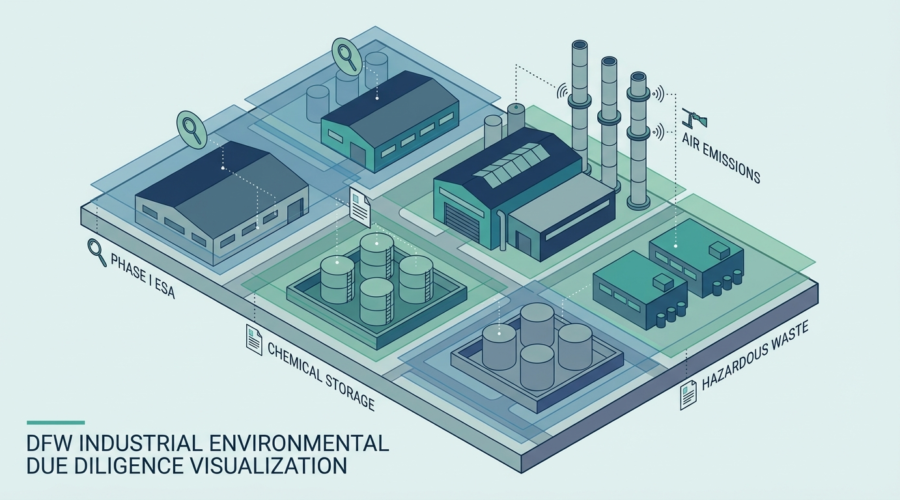
Industrial property acquisitions in Dallas-Fort Worth represent some of the most complex environmental due diligence scenarios in the commercial real estate market. The DFW industrial sector — driven by its central logistics position, access to multiple major rail lines and interstate highways, and proximity to two major airports — has attracted significant capital over the past decade, with industrial vacancy rates at historic lows and speculative development continuing at pace through Alliance, Mesquite, Grand Prairie, and along the I-20 and I-30 corridors.
What institutional and private equity investors sometimes underestimate is that industrial properties carry an environmental risk profile that is categorically different from retail, office, or multifamily assets. The due diligence approach that works for a suburban office building doesn’t work for a former manufacturing facility in Grand Prairie or a chemical distribution warehouse along I-35W. Industrial acquisitions require a deeper, more specific environmental assessment — and the difference between adequate and inadequate due diligence in this category is measured in significant remediation liability.
As an ASTM E1527-21 Environmental Professional with a PhD in Environmental Engineering from Texas A&M University-Kingsville and extensive experience conducting Phase I and Phase II Environmental Site Assessments for industrial properties across DFW, this post walks through what distinguishes industrial environmental due diligence from standard commercial assessments — and what the consequences are of not recognizing that difference.
Why Industrial Properties Present a Different Risk Profile
The fundamental difference between industrial and standard commercial properties from an environmental perspective is simple: industrial properties use, store, generate, and dispose of chemicals at a scale and variety that commercial retail or office properties don’t. A strip mall tenant might have a few cleaning chemicals under a sink. A manufacturing tenant might have 50,000 pounds of chemical inventory, a hazardous waste storage area, multiple industrial processes generating regulated waste streams, and decades of operational history that created subsurface conditions the current owner may know nothing about.
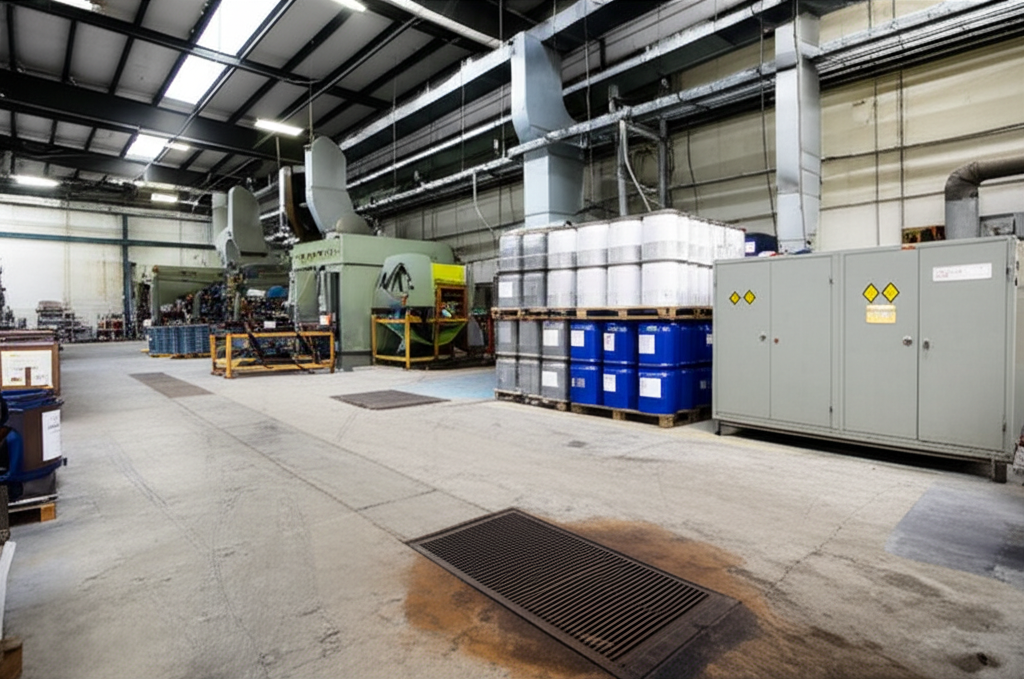
The specific risk categories that distinguish industrial due diligence in DFW:
Manufacturing and Chemical Processing
DFW’s industrial base includes metal fabrication and machining, electronics manufacturing, plastics and polymers, food processing, pharmaceutical manufacturing, and chemical compounding and distribution. Each of these sectors uses specific chemical compounds that create specific contamination signatures:
- Metal fabrication and machining — Cutting fluids, degreasing solvents (TCE, TCA, PCE), electroplating chemicals (chromium, cadmium, nickel, cyanide), and waste oil represent the primary contamination concerns. Chromium VI from plating operations is particularly significant — it’s highly mobile in groundwater and carries strict TCEQ PCLs.
- Electronics manufacturing — Historical electronics assembly used chlorinated solvents extensively for cleaning circuit boards. Pre-1990 electronics manufacturing facilities are among the highest-risk properties for chlorinated solvent contamination in the DFW market.
- Chemical distribution — Facilities that handled bulk chemical inventories create contamination risk from spills, container failures, tank releases, and waste disposal practices. The specific contaminants depend on the inventory handled, which may have changed across multiple tenants over decades.
- Oil and gas support services — DFW’s role as a support hub for Texas energy production means that some industrial properties housed drilling equipment maintenance, pipe coating, valve manufacturing, and other O&G support activities — all of which involve petroleum products, coatings, and sometimes naturally occurring radioactive materials (NORM).
Multi-Tenant Industrial History
Industrial properties frequently have multi-tenant histories spanning decades. A building constructed in 1968 in south Dallas may have housed five or six different tenants before the current owner acquired it — each with different operations, different chemical inventories, and different waste disposal practices. The cumulative effect of multiple industrial tenants over decades creates a layered contamination history that can be difficult to reconstruct from historical records alone.
For multi-tenant industrial buildings, historical records research should attempt to identify each tenant and their specific operations — not just document that the building was “general industrial” use. City directories, building permit records, business license files, and interviews with long-term building managers are essential tools.
Regulatory Compliance History: What the Records Reveal
Industrial properties are subject to a broader range of environmental regulatory requirements than commercial retail properties, and their compliance history is a critical due diligence input. TCEQ and EPA maintain compliance databases that reflect inspection history, violation records, and enforcement actions — and these records can reveal operational conditions that don’t appear in the physical assessment.
TCEQ Air Quality Permits
Many industrial operations require TCEQ air quality permits for regulated air emissions. The permit history — what was permitted, what was actually emitted, and whether there were permit exceedances — provides information about the types of chemicals handled at the facility and any historical compliance problems. Air permit exceedances for volatile organic compounds (VOCs) may indicate historical releases that affected soil and groundwater, not just air quality.
TCEQ Water Quality Discharge Permits
Industrial facilities that discharge process water, stormwater, or cooling water may hold TCEQ wastewater discharge permits (TPDES permits). Review of the permit and discharge monitoring reports can identify the types of pollutants in the facility’s discharge streams and any historical exceedances that suggest uncontrolled releases.
RCRA Hazardous Waste Generator Status
The Resource Conservation and Recovery Act (RCRA) requires generators of hazardous waste to register with EPA and comply with generator requirements for waste storage, manifesting, and disposal. The EPA RCRA database records a facility’s historical generator status — which waste codes they generated, how frequently, and to which disposal facilities. This information is a direct indicator of the types of hazardous materials handled at the facility and the quality of their waste management practices.
Violations of RCRA generator requirements — improper storage, missing manifests, disposal at unregistered facilities — indicate historical waste management practices that may have resulted in soil or groundwater contamination.
EPCRA Tier II Chemical Inventory Reports
Facilities that store threshold quantities of hazardous chemicals are required to file annual Tier II chemical inventory reports with state and local emergency planning committees under EPCRA Section 312. Historical Tier II reports provide a detailed inventory of chemicals stored at the facility by year — exactly what due diligence needs to characterize the contamination risk profile.
Chemical Inventories, SDSs, and Waste Manifests
Beyond regulatory records, the actual operational records of the facility — chemical inventories, safety data sheets (SDSs), and hazardous waste manifests — are critical due diligence documents for industrial acquisitions. These records document:
- The specific chemicals used in facility operations and their concentrations
- The quantities stored on-site at various times
- The waste streams generated and how they were disposed of
- Which disposal facilities received the facility’s waste — relevant because CERCLA liability can extend to parties who arranged for disposal at contaminated sites
Requesting these records as part of due diligence — and evaluating gaps and inconsistencies in the record — is standard practice for industrial property Phase I assessments. A facility that handled significant quantities of chlorinated solvents for 20 years but has no waste manifests documenting proper disposal of chlorinated solvent waste has an obvious documentation gap that warrants additional investigation.
Indoor Air Quality and Vapor Intrusion
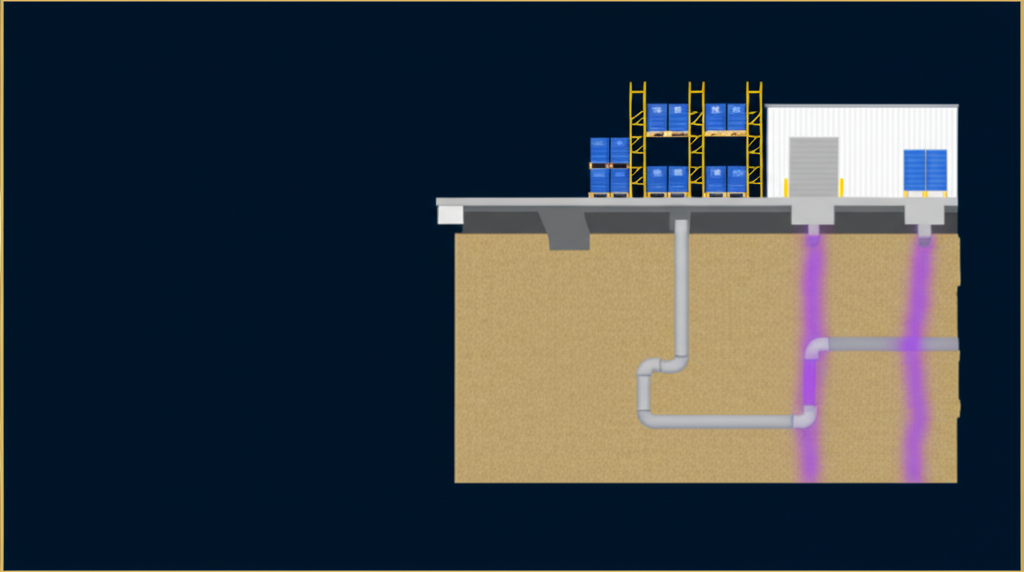
Industrial properties present a particular vapor intrusion challenge because they often involve both on-site sources of volatile contamination (historical chemical releases from their own operations) and elevated occupancy of the contaminated building by workers who may have high exposure potential in a poorly ventilated industrial workspace.
Under ASTM E1527-21, vapor migration from contaminated soil or groundwater to indoor air is a required pathway evaluation for Phase I assessments. For industrial properties where volatile contaminants are known or suspected — chlorinated solvents, petroleum hydrocarbons, BTEX compounds — vapor intrusion evaluation needs to be more than a checkbox. It requires assessment of:
- The types and concentrations of volatile contaminants in the subsurface (from historical Phase II data if available, or from Phase II investigation if not)
- The depth to contamination relative to the building foundation
- Foundation construction type — slab-on-grade, basement, crawl space — and the integrity of floor slab and utility penetrations
- Building ventilation characteristics — HVAC type, air exchange rates, negative pressure conditions that may draw vapor in
For properties where vapor intrusion is a concern, Phase I findings may support a recommendation for indoor air quality sampling as part of Phase II scope — not just soil and groundwater characterization.
Decommissioning Liability: What’s Still in the Building
Industrial properties frequently contain equipment, materials, and building components that create environmental obligations at the time of decommissioning or demolition:
Asbestos-Containing Materials (ACM)
Industrial buildings constructed before 1980 almost universally contain asbestos in some form — pipe insulation, duct insulation, boiler insulation, floor tiles, mastic adhesives, roofing materials, or fireproofing. NESHAP (National Emission Standards for Hazardous Air Pollutants) regulations require asbestos surveys and, where friable ACM is present, asbestos abatement prior to demolition or renovation.
Buyers who plan renovation or demolition of legacy industrial buildings need to understand that asbestos remediation costs can be substantial — $2 to $25 per square foot depending on the type, quantity, and accessibility of ACM. These costs need to be in the due diligence budget, not discovered post-closing.
Lead-Based Paint
Industrial facilities often have extensive painted surfaces — structural steel, interior walls, equipment — with lead-based paint on pre-1978 structures. Lead paint creates regulatory obligations for renovation (EPA’s Lead Renovation, Repair and Painting Rule) and waste management obligations if painted materials are removed.
PCB-Containing Equipment
Large electrical transformers, capacitors, and hydraulic equipment manufactured before 1980 may contain polychlorinated biphenyls (PCBs) as dielectric fluid. PCBs are regulated under TSCA and require specific disposal procedures. Transformers with PCB-containing oil that have leaked create significant soil contamination in transformer vaults or surrounding areas.
Process Chemicals and Waste Streams
Industrial properties that are acquired mid-operation or shortly after operations cease may still contain process chemicals, waste materials, or both — in storage tanks, process vessels, waste accumulation areas, or drums abandoned on-site. These materials create immediate environmental liability for the acquiring party and must be inventoried, characterized, and properly disposed of before site redevelopment.
What Adequate Industrial Due Diligence Looks Like
For industrial property acquisitions in the DFW market, adequate environmental due diligence requires more than a standard Phase I template. The scope should be calibrated to the specific operational history of the facility:
- Extended historical records research — City directories, permit records, EPCRA Tier II filings, and RCRA generator records for all known historical operators
- Comprehensive regulatory compliance review — TCEQ air, water, and waste compliance history; EPA RCRA and EPCRA records; any documented enforcement actions
- Chemical inventory and waste manifest review — Request and review of available SDSs, chemical inventory records, and hazardous waste manifests
- Thorough interior reconnaissance — Evaluation of all accessible process areas, chemical storage areas, floor drains, sumps, and mechanical areas
- Phase II investigation recommendation — Specific, scoped Phase II investigation for the contamination concerns identified, not a generic sampling program
Industrial Properties in DFW: The Stakes Are High
Industrial properties in the DFW market are trading at high valuations relative to historical norms. In that context, environmental due diligence shortcuts are particularly dangerous — the purchase prices don’t leave room for surprise remediation costs or regulatory liabilities that weren’t in the underwriting. A $15 million industrial acquisition with a $3 million remediation problem that wasn’t identified in due diligence is a very different investment than the one that was modeled.
At Vertexium Environmental Solutions, we approach industrial property assessments with the depth and specificity the asset class requires. Our Phase I ESA, Phase II ESA, and environmental due diligence package are scoped to the specific history and risk profile of each industrial property — not applied from a template designed for a suburban retail strip.
Contact us at vertexiumenv.com/contact.html before your next industrial acquisition in DFW. The environmental history matters — and it’s worth knowing before you close.
Need Environmental Due Diligence?
Vertexium Environmental Solutions delivers Phase I ESAs with 2-3 week turnaround, fixed-fee pricing, and PhD-level technical review on every report.
Book a Free Consultation
Dr. Mohamed Elansary
PhD in Environmental Engineering from Texas A&M University-Kingsville. Founder of Vertexium Environmental Solutions, delivering Phase I/II ESAs and environmental due diligence for commercial real estate across the DFW Metroplex.