
On February 14, 2023, the environmental consulting industry changed — or at least, it was supposed to. That date marked the formal effective date of ASTM E1527-21, the updated standard governing Phase I Environmental Site Assessments and the satisfaction of All Appropriate Inquiries (AAI) under CERCLA. The previous standard, ASTM E1527-13, was officially superseded.
More than a year later, the industry hasn’t fully caught up. Phase I reports are still being delivered — and accepted — that were conducted under outdated methodology. Lenders are accepting reports that don’t meet the current standard. Buyers are closing on properties under the impression that their environmental due diligence satisfies AAI, when it may not.
As an ASTM E1527-21 Environmental Professional who conducts Phase I Environmental Site Assessments under the current ASTM E1527-21 standard, I want to break down exactly what changed, why it matters, and how to verify that the Phase I report you’re relying on actually protects you.
Why the Standard Exists — and Why It Changes
The ASTM E1527 standard exists to define what constitutes “All Appropriate Inquiries” under CERCLA — specifically, what level of due diligence a buyer must conduct to qualify for the innocent landowner defense against Superfund liability. EPA has incorporated ASTM E1527 by reference into its AAI regulations (40 CFR Part 312), which means the standard carries federal regulatory weight.
ASTM standards are periodically revised to reflect advances in scientific understanding, changes in regulatory requirements, and lessons learned from practical application. The 2021 revision was driven primarily by three developments: the emergence of PFAS and other contaminants as significant environmental concerns, increased scientific understanding of vapor intrusion as a contamination pathway, and experience with how data gaps were being handled (or mishandled) in Phase I reports under the 2013 standard.
Each time the standard is revised, reports prepared under the old version become potentially inadequate for satisfying AAI under current requirements. This matters because the AAI defense is time-sensitive: it must be satisfied at or prior to the time of acquisition, and it must reflect the current standard in effect at that time.
Change #1: Emerging Contaminants — PFAS Now on the Radar
This is the most significant conceptual change in the 2021 standard. ASTM E1527-21 introduces formal consideration of “emerging contaminants” — chemical compounds that have been identified as potential environmental concerns but may not yet be fully regulated or may not appear in standard regulatory databases.

The primary driver of this change is per- and polyfluoroalkyl substances (PFAS), a class of thousands of synthetic chemicals used in industrial and consumer applications since the 1950s. PFAS compounds — most notably PFOA and PFOS — have been used in:
- Aqueous film-forming foam (AFFF), used at military installations, airports, and industrial fire training sites
- Non-stick coatings in cookware manufacturing
- Food packaging materials
- Textile and leather treatment
- Semiconductor and electronics manufacturing
- Firefighting operations broadly
PFAS are extraordinarily persistent in the environment — they don’t biodegrade under normal subsurface conditions — and have been detected in drinking water supplies across the country at concentrations associated with potential health effects. EPA finalized drinking water MCLs for PFOA and PFOS in 2024, at 4 parts per trillion — a standard so stringent that it has elevated PFAS to a first-tier contamination concern for a wide range of commercial and industrial properties.
What this means for Phase I in DFW
For properties in the Dallas-Fort Worth Metroplex, PFAS concerns are particularly relevant for:
- Properties near military installations (NAS Fort Worth JRB, Naval Air Station Dallas, former Carswell AFB) where AFFF was used for decades
- Properties near commercial airports (DFW International, Dallas Love Field, Alliance, Meacham) where fire suppression foam training and emergency response activities occurred
- Properties with historical industrial fire training or firefighting operations
- Properties adjacent to landfills that accepted industrial waste prior to modern liner requirements
Under E1527-21, the Environmental Professional must now consider whether emerging contaminants are relevant to the subject property’s historical use and surrounding land uses — and must document this consideration in the report. An EP who simply ignores PFAS because it isn’t in the regulatory databases has failed to comply with the current standard.
Change #2: Vapor Migration — From Optional to Mandatory
Under ASTM E1527-13, vapor intrusion — the migration of volatile organic compounds from contaminated soil or groundwater into overlying structures — was addressed inconsistently. Some Environmental Professionals evaluated it thoroughly; others barely mentioned it. The 2013 standard created ambiguity that resulted in highly variable vapor intrusion assessments across Phase I reports.
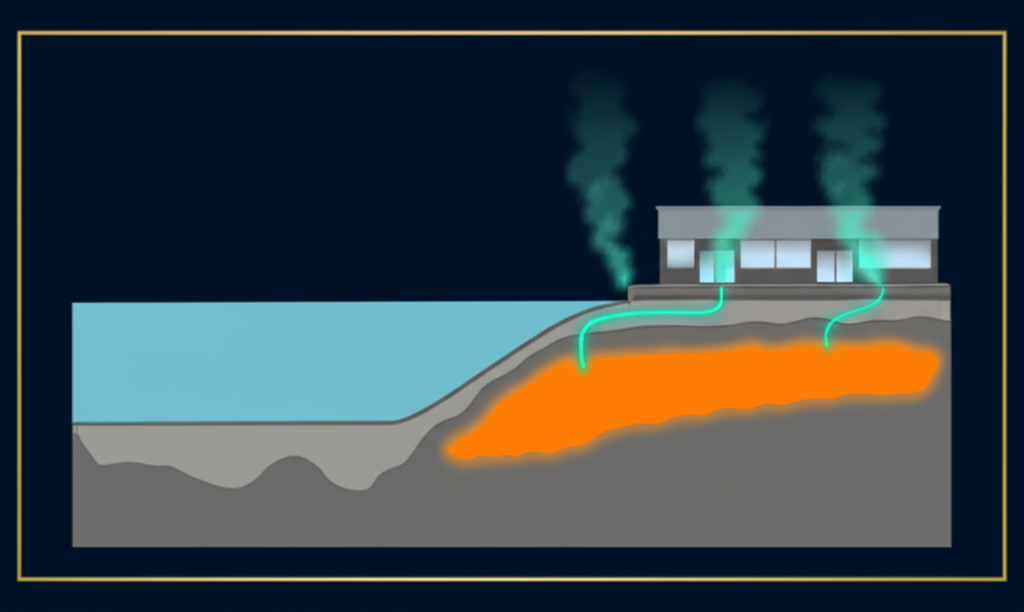
ASTM E1527-21 resolved this ambiguity: vapor migration is now a mandatory consideration as a pathway for Recognized Environmental Conditions (RECs). Specifically, the 2021 standard clarifies that:
- Vapor migration from contaminated soil or groundwater to indoor air is a recognized pathway that must be evaluated as part of the Phase I
- Both on-site and off-site sources of volatile contamination must be evaluated as potential vapor intrusion sources
- The proximity of volatile contaminant sources to occupied structures must be assessed relative to site-specific conditions (building construction, foundation type, depth to groundwater, soil characteristics)
Why this matters in DFW’s geology
Vapor intrusion assessment in the DFW Metroplex requires understanding the region’s variable geology. The Eagle Ford clay formation, which underlies much of the Metroplex, has very low permeability — which can create a barrier to vapor migration in some configurations, but can also create pressure differentials that drive vapor transport in others. The Austin Chalk limestone, with its fractures and solution channels, provides preferential pathways for vapor migration that are difficult to predict without site-specific investigation.
Properties where volatile contaminants (chlorinated solvents, petroleum hydrocarbons, PFAS) are present in the subsurface — or where off-site sources of volatile contamination exist within the regulatory search distance — require explicit vapor intrusion evaluation in the Phase I. A report that doesn’t address vapor migration in these contexts doesn’t meet the E1527-21 standard.
Change #3: Data Gaps — Mandatory Documentation and Professional Judgment
A data gap exists when information needed for the Phase I assessment is not available — historical records that no longer exist, site access limitations that prevent inspection of certain areas, or regulatory databases that don’t have complete information for all sites. Data gaps are inevitable in any Phase I; the question is how they are handled.
Under ASTM E1527-13, data gap treatment was inconsistently applied. Some Environmental Professionals characterized data gaps as automatically creating RECs (creating unnecessarily alarming reports). Others treated data gaps as irrelevant if they couldn’t find contamination evidence (creating dangerously incomplete reports). The result was significant variability in how data gaps were reported and what conclusions could be drawn from them.
ASTM E1527-21 provides significantly clearer guidance:
- Data gaps must be explicitly identified in the report
- The EP must exercise professional judgment to assess whether each data gap is likely to have affected the findings of the assessment
- If a data gap could have resulted in a failure to identify a REC, it must be characterized as a REC or a CREC (Controlled Recognized Environmental Condition) — not simply noted and dismissed
- The EP must recommend how significant data gaps should be addressed (additional records research, limited Phase II investigation, etc.)
Common data gaps in DFW Phase I assessments
In my experience conducting Phase I assessments across the DFW Metroplex, the most common data gaps involve:
- Inaccessible interior spaces (locked rooms, sealed mechanical areas, sub-slab areas)
- Incomplete historical records for properties developed in the 1950s-1970s, particularly in areas where local government records have not been digitized
- Unavailable regulatory documentation for sites that appear in databases but where the full file record has not been produced
- Owner/operator interviews where the current or historical site manager is unavailable or unresponsive
Each of these creates a data gap that must be addressed explicitly under E1527-21 — with professional judgment applied to determine whether the gap affects the overall conclusions of the assessment.
Change #4: Updated Regulatory Database Requirements
ASTM E1527-21 updated the required regulatory database searches and search radii to reflect changes in federal and state databases since 2013. Key updates include:
- Expanded consideration of state-equivalent lists — The standard now requires more explicit consideration of state-level regulatory databases that may not be captured in the standard federal search packages.
- PFAS-related databases — Environmental Professionals must now search available databases for PFAS contamination sites, including EPA’s PFAS-contaminated sites database and state-equivalent resources.
- Updated search radii documentation — The standard clarifies the basis for search radius selection and requires that any deviation from minimum search distances be explicitly justified in the report.
For Texas properties, this means that TCEQ’s full suite of databases — LPST, IHW, VCP, ECOS/EDGE, and the TCEQ Spills database — must all be searched and reported, along with federal databases from EPA’s ECHO, RCRA Info, CERCLIS, and PFAS systems.
Is Your Existing Phase I Report Still Valid?
This is the practical question that matters for ongoing transactions. Here’s a straightforward framework for assessing whether a Phase I report meets current requirements:
Automatic disqualification criteria:
- Report date is more than 180 days before the intended acquisition date (currency requirement)
- Report explicitly states it was prepared under ASTM E1527-13 (or earlier) with no update or re-certification under E1527-21
- Report pre-dates February 14, 2023 and has not been updated
Red flags requiring EP review:
- Report does not mention PFAS or emerging contaminants (for properties with relevant historical uses)
- Report does not address vapor migration as a pathway (for properties where volatile contaminants are present on-site or nearby)
- Report identifies data gaps without applying professional judgment about their significance
- Regulatory database search does not include current TCEQ and EPA databases
What to do if your report may be non-compliant:
In most cases, a Phase I report prepared under E1527-13 can be updated to comply with E1527-21 through a formal re-evaluation by a qualified Environmental Professional — without necessarily repeating the entire assessment. The EP must review the existing report, identify any gaps relative to the 2021 standard, conduct any additional research or site evaluation required to address those gaps, and issue an updated report under their professional signature.
This is significantly less expensive than a full Phase I from scratch, but it is not free — and it is not a rubber stamp. If the original assessment didn’t adequately address vapor migration or emerging contaminants, the update may require substantive additional work.
Selecting an EP Who Actually Knows the Current Standard
ASTM E1527-21 requires that the Phase I be conducted by a qualified “Environmental Professional” as defined in 40 CFR Part 312. The EP must have appropriate education, training, and experience — but the standard doesn’t specify familiarity with E1527-21 itself.
In practice, this means some individuals who technically qualify as Environmental Professionals are still conducting assessments under the 2013 standard — either because they haven’t updated their knowledge, because their firm hasn’t updated its templates, or because their clients haven’t demanded compliance with the current standard.
When evaluating a Phase I consultant, ask specifically:
- Will this report be prepared under ASTM E1527-21 (not E1527-13)?
- How does the report address emerging contaminants for properties with relevant historical uses?
- How does the report evaluate vapor migration as a contamination pathway?
- Will the report explicitly document data gaps and apply professional judgment to their significance?
- Will a licensed Professional Engineer review and sign the report?
If the answer to any of these questions is vague or unconvincing, the report may not satisfy AAI — and the liability protection you’re paying for may not actually exist.
The Bottom Line: E1527-21 Is Not a Minor Update
The shift from E1527-13 to E1527-21 represents a meaningful evolution in what constitutes adequate environmental due diligence. The addition of emerging contaminants, the formalization of vapor intrusion evaluation, the clarification of data gap requirements — these aren’t editorial changes. They reflect substantive updates to how Environmental Professionals are expected to assess and report environmental conditions.
In a legal context, conducting a Phase I under an outdated standard — or relying on one — may not satisfy AAI and may leave the buyer without the innocent landowner defense that the Phase I was intended to establish. That’s a significant exposure for a process that should be providing liability protection.
Get a Phase I ESA That Actually Meets the Current Standard
At Vertexium Environmental Solutions, every Phase I ESA we deliver is prepared under ASTM E1527-21, with explicit consideration of emerging contaminants, vapor migration pathways, and proper data gap documentation. Our reports are prepared under ASTM E1527-21 standards by a qualified Environmental Professional; when a PE seal is required for a TCEQ submission, we engage a licensed Texas PE through our subcontractor network with doctoral-level environmental engineering expertise from Texas A&M University-Kingsville.
Phase I ESA pricing is scoped to the property. If your existing report may not satisfy the current standard, we can evaluate it and provide a compliant update.
Don’t close on a property with a Phase I that doesn’t protect you. Contact us at vertexiumenv.com/contact.html to discuss your specific situation.
Need Environmental Due Diligence?
Vertexium Environmental Solutions delivers Phase I ESAs with 2-3 week turnaround, fixed-fee pricing, and PhD-level technical review on every report.
Book a Free Consultation
Dr. Mohamed Elansary
PhD in Environmental Engineering from Texas A&M University-Kingsville. Founder of Vertexium Environmental Solutions, delivering Phase I/II ESAs and environmental due diligence for commercial real estate across the DFW Metroplex.