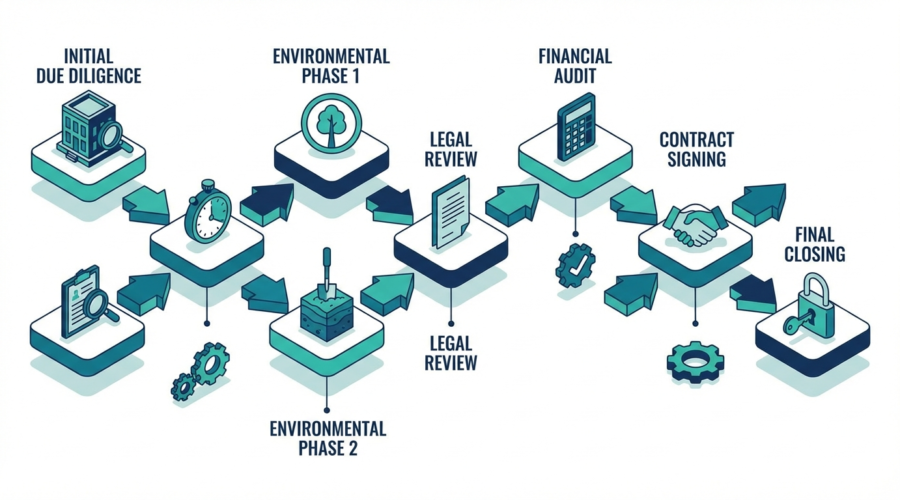
Commercial real estate moves fast in Dallas-Fort Worth. Deals get structured, earnest money goes hard, and closing timelines compress under competitive pressure. But environmental due diligence doesn’t compress — not without risk. The contamination sitting below that Frisco industrial pad or that Denton retail strip doesn’t care about your closing date.
This checklist reflects how I approach environmental due diligence on DFW commercial properties — a structured 60-day process built around ASTM standards, TCEQ regulatory requirements, and the specific geological and land-use conditions found throughout the Metroplex. If you’re a buyer, developer, or portfolio manager acquiring commercial real estate in North Texas, this is the framework that protects your investment.
For a comprehensive environmental due diligence engagement, expect the process to run 45-60 days from contract execution to final report delivery. Here’s how those days should be structured.
Days 1-7: Contract Execution and Scope Definition
Retain Your Environmental Professional Immediately
The single most costly mistake buyers make is treating environmental due diligence as a late-stage checkbox rather than a day-one priority. The moment your purchase contract is executed, your environmental professional should be engaged. Not after financing is confirmed. Not after title comes back clean. Day one.
Why does timing matter this much? Because the Phase I ESA under ASTM E1527-21 requires a site visit, regulatory database research, historical record review, and interviews — and the database searches themselves can take 5-7 business days to return results. Every day you delay the engagement is a day you’re compressing the back end of the process, which is where the analysis actually happens.
Define the Scope
The standard Phase I ESA covers the subject property and its vicinity for Recognized Environmental Conditions (RECs). But depending on the property type, location, and intended use, you may need:
- Transaction Screen: For lower-risk properties where full Phase I scope may be disproportionate to risk
- Standard Phase I ESA (ASTM E1527-21): The baseline for all commercial transactions and CERCLA innocent landowner defense
- Phase I plus Supplemental Services: Asbestos surveys, lead-based paint assessments, mold investigations — particularly relevant for properties with structures built before 1980
- Phase II ESA: If you already have reason to believe contamination is present, or if prior Phase I reports identified RECs requiring subsurface investigation
Gather Available Documents
Request from the seller or listing broker: any prior Phase I or Phase II reports, TCEQ correspondence, underground storage tank records, spill notifications, environmental permits, and any known deed restrictions or institutional controls. Prior reports don’t eliminate the need for a current assessment — ASTM E1527-21 has a shelf life of 180 days for the environmental professional’s work and one year for the All Appropriate Inquiries (AAI) user questionnaire — but they give your EP critical background and can accelerate the historical research phase.
Days 8-21: Phase I ESA Execution
Regulatory Database Research
The database research phase covers federal and state regulatory databases to identify any records of environmental releases, permits, enforcement actions, or regulated facilities associated with the subject property or properties within ASTM-specified search radii. In Texas, the critical databases include:
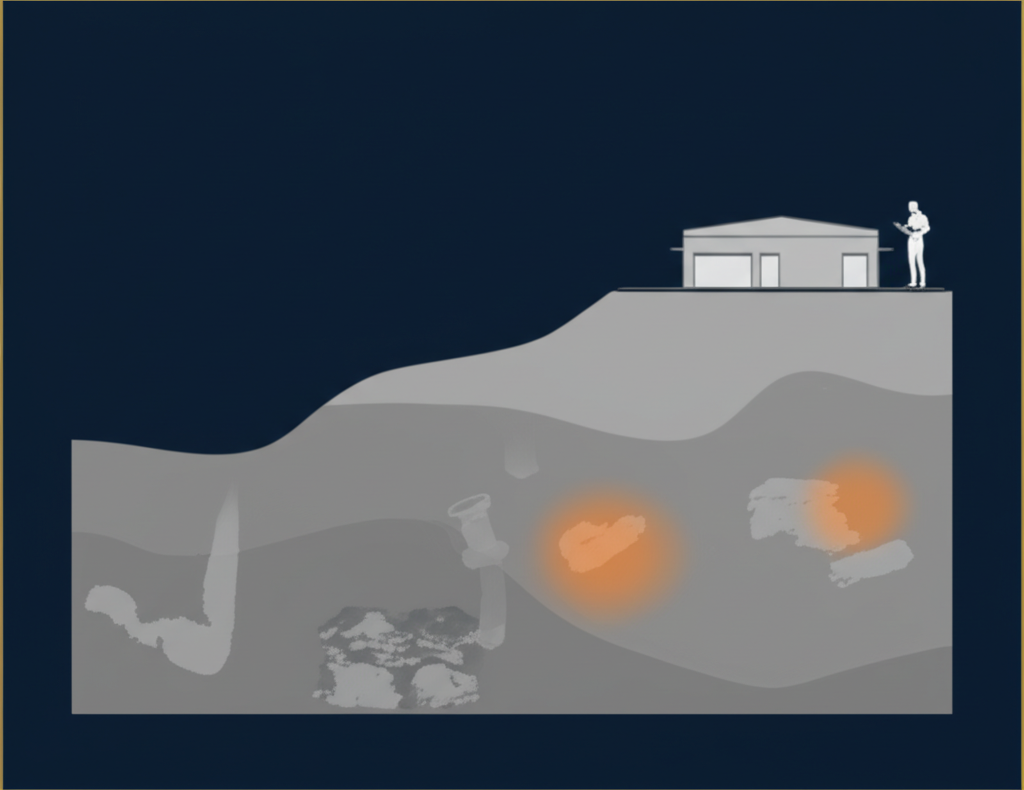
- TCEQ LPST (Leaking Petroleum Storage Tank) Database: The primary source for petroleum release sites. DFW has hundreds of open LPST cases, many of them adjacent to or beneath commercial corridors that have been redeveloped since the original release.
- TCEQ RCRA Hazardous Waste Database: Generators, transporters, and TSDFs (Treatment, Storage, and Disposal Facilities)
- TCEQ Underground Storage Tank Database: Active and deregistered UST registrations. Deregistered tanks are frequently abandoned in place without proper closure documentation.
- EPA NPL (National Priorities List): Federal Superfund sites within search radius
- EPA RCRA Corrective Action Sites (CORRACTS): Facilities subject to cleanup under RCRA Corrective Action authority
- TCEQ Voluntary Cleanup Program (VCP): Properties enrolled in Texas VCP for voluntary remediation
Historical Records Review
This is where Phase I quality separates from Phase I box-checking. Historical records should document the property’s use back to first developed use, not just the last 30 years. In DFW, this means:
- Sanborn Fire Insurance Maps: Available for most DFW municipalities from the 1880s through the mid-20th century. These maps show building footprints, construction materials, occupancy types, and features like tanks, boilers, and chemical storage.
- Historical aerial photographs: USGS, NRCS, and commercial providers offer coverage from the 1930s forward. Sequential review of aerial photography can reveal former industrial operations, USTs, surface impoundments, or waste disposal areas that no longer exist at the surface.
- City directory research: Occupant records from city directories cross-referenced with the property address can identify former industrial tenants not captured by other historical sources.
- Building permit records: Available from municipal planning departments, building permits can document construction of structures, installation of tanks, and changes in occupancy.
Site Reconnaissance
The site visit under ASTM E1527-21 is not a walk-around. It’s a systematic inspection of observable conditions that may indicate RECs, controlled RECs (CRECs), or historical RECs (HRECs). In DFW, I look specifically for:
- Stressed or dead vegetation in patterns inconsistent with drought or shade (potential indicator of subsurface contamination)
- Staining on paved surfaces, loading docks, or around floor drains
- Odors associated with petroleum products, solvents, or chemical storage
- Evidence of former USTs: vent pipes, fill ports, dispenser islands
- Proximity to railroad corridors (arsenic herbicide application history)
- Adjacent land use conditions that may represent off-site RECs
Days 22-35: Analysis and REC Evaluation
Evaluating DFW-Specific Geological Risk Factors
Environmental risk assessment in the Dallas-Fort Worth Metroplex requires understanding the local geology in a way that generic Phase I report templates don’t capture. The Metroplex sits at the intersection of multiple geological formations, each with different implications for contaminant fate and transport:
- Eagle Ford Shale and Clay: Widespread throughout the western DFW Metroplex (Arlington, Grand Prairie, Irving, portions of Fort Worth). The Eagle Ford clay is highly expansive — it swells when wet and shrinks when dry. This shrink-swell behavior can fracture utility lines, building foundations, and underground structures, creating preferential pathways for contaminant migration. It also complicates Phase II sampling because clay permeability is low, meaning petroleum or solvent releases may stay concentrated near the source rather than forming dilute plumes.
- Austin Chalk: Underlies much of the central and northern DFW Metroplex (Dallas, Plano, Richardson, portions of Frisco). The Austin Chalk is a fractured limestone formation — and fractures in bedrock are highways for contaminant transport. Dense non-aqueous phase liquids (DNAPLs) like chlorinated solvents can migrate rapidly through fracture networks in ways that are extremely difficult to characterize or remediate.
- Woodbine Sand: The primary shallow aquifer in many parts of DFW. Where the Woodbine is the uppermost saturated formation, it’s directly vulnerable to contamination from surface and near-surface releases.
Off-Site Source Evaluation
Off-site conditions are the area where many Phase I reports fall short. ASTM E1527-21 requires evaluation of properties within defined search radii, but it doesn’t define exactly how much investigative effort is required for each identified site. A thorough Phase I considers:
- The direction of groundwater flow relative to identified off-site releases (downgradient sites are higher risk)
- The regulatory status of any open LPST cases on adjacent properties (active investigation? remediation complete? no further action?)
- Whether any identified off-site sources have plume characterization data that indicates migration toward the subject property
Days 36-45: Phase I Report Delivery and Decision Point
Understanding the REC Spectrum
When your Phase I report comes back, the critical deliverable is the Environmental Professional’s REC determination. Not all RECs are created equal:
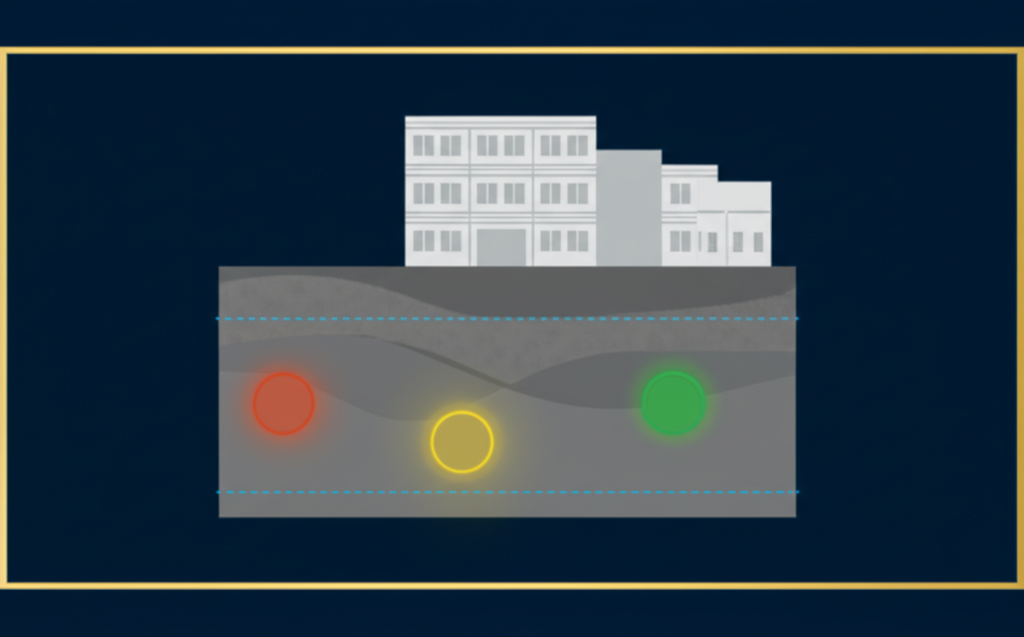
- REC (Recognized Environmental Condition): The presence or likely presence of hazardous substances or petroleum products in, on, or at the property due to a release or threatened release. This is the condition that, if confirmed by Phase II investigation, may result in remediation liability.
- CREC (Controlled REC): A former REC that has been addressed to regulatory closure with engineering or institutional controls in place. The contamination is managed, not eliminated. Future land use changes may reactivate the CREC.
- HREC (Historical REC): A past release that has been addressed to unrestricted use closure — cleanup complete, regulatory closure obtained, no controls required.
- Business Environmental Risk (BER): Conditions that may affect the value or use of the property but don’t rise to the level of a REC under ASTM definition. In DFW, regulatory agency file reviews sometimes reveal BER conditions not captured in database searches.
The Go/No-Go Decision
If the Phase I returns clean — no RECs identified — you have your CERCLA innocent landowner defense baseline documentation. The transaction can proceed with confidence from an environmental standpoint.
If RECs are identified, the decision tree branches:
- Phase II ESA: Subsurface investigation to confirm or rule out contamination associated with the identified REC
- Price renegotiation: Use REC findings to renegotiate the purchase price, reflecting the cost of investigation and potential remediation
- Seller remediation contingency: Require seller to address identified RECs prior to closing
- Walk away: If the environmental risk profile is incompatible with the intended use or investment return requirements
Days 46-60: Phase II ESA (If Required)
Sampling Design for DFW Conditions
If Phase I findings warrant a Phase II ESA, the sampling plan must be designed around the specific REC identified and the geological conditions at the site. In DFW, this means:
- For petroleum RECs: Soil borings targeted at suspected source areas (former UST locations, loading docks, hydraulic lifts) plus monitoring well installation to characterize groundwater conditions. TCEQ LPST guidance requires analytical methods consistent with the Texas Risk Reduction Program (TRRP).
- For chlorinated solvent RECs: Deeper borings targeting bedrock contacts and fracture zones in Austin Chalk areas. Soil vapor sampling may be required to evaluate vapor intrusion pathways.
- For arsenic RECs (railroad corridors): Shallow soil sampling (0-0.5 ft bgs, 0.5-2 ft bgs) along the property boundary adjacent to the rail corridor, analyzed against TCEQ PCLs for commercial/industrial land use.
Interpreting Results Against TCEQ Standards
Phase II results are evaluated against TCEQ’s Texas Risk Reduction Program (TRRP) Protective Concentration Levels (PCLs), which are land-use specific. The commercial/industrial PCLs in Texas are less stringent than residential PCLs — which means contamination levels that would require remediation under a residential land use scenario may be acceptable under an industrial/commercial classification. Understanding how to apply the correct PCLs and how to document the applicable exposure assumptions is a technical skill that directly affects whether a property requires remediation.
The Bottom Line: What This Process Costs You
Comprehensive environmental due diligence on a DFW commercial property typically involves:
- Phase I ESA: scoped to property — standard ASTM E1527-21 assessment covering site reconnaissance, database research, historical records, and EP report
- Phase II ESA (if required): scoped to investigation — scope-dependent on number of borings, monitoring wells, and analytical parameters required
- Full Due Diligence Package: scoped to property — Phase I plus regulatory agency file review, expanded historical research, and transaction risk summary
Against the cost of a commercial real estate transaction — even a modest $2M industrial acquisition — these fees represent a fraction of a percent of deal value. The cost of discovering contamination after closing, without the CERCLA innocent landowner defense protections that a compliant Phase I provides, can be orders of magnitude higher.
Environmental due diligence isn’t a box to check. It’s the foundation that makes the rest of the transaction defensible.
Schedule Your Due Diligence Assessment
I conduct Phase I ESAs, Phase II investigations, and comprehensive due diligence packages throughout the Dallas-Fort Worth Metroplex — Collin, Dallas, Denton, Tarrant, Rockwall, and surrounding counties. If you have a property under contract or in active consideration, the time to start is now.
Contact us at vertexiumenv.com/contact.html — same-week availability for urgent transactions.
Need Environmental Due Diligence?
Vertexium Environmental Solutions delivers Phase I ESAs with 2-3 week turnaround, fixed-fee pricing, and PhD-level technical review on every report.
Book a Free Consultation
Dr. Mohamed Elansary
PhD in Environmental Engineering from Texas A&M University-Kingsville. Founder of Vertexium Environmental Solutions, delivering Phase I/II ESAs and environmental due diligence for commercial real estate across the DFW Metroplex.